
Sunil Gavaskar voices concern with a key question after India’s Women’s T20 World Cup campaign ends

Table of Contents
India’s quest for global glory suffered a crushing blow as their Women’s T20 World Cup 2026 campaign came to a premature and heartbreaking end. Entering their final group-stage clash against arch-rivals Australia in a strict do-or-die scenario, the Women in Blue needed a flawless performance to secure a semi-final berth. Despite a valiant effort and a highly competitive performance, India fell short against the clinical Australians, sparking intense debate across the cricketing fraternity. In the wake of this exit, legendary former captain Sunil Gavaskar has emerged as a prominent voice, raising tough, analytical questions about the team’s tactical decisions and physical readiness during the showpiece event.
Reviewing the tournament’s outcome, Gavaskar pointed out that while losing to a powerhouse like Australia is never entirely unexpected, India’s ultimate undoing occurred much earlier in the tournament. Writing in his column for Sportstar, the batting maestro emphasized that a shocking, error-strewn defeat to South Africa was the true catalyst for India’s exit. Gavaskar pulled no punches regarding the team’s defensive lapses in that crucial fixture, labelling their fielding display as abysmal and noting that they threw away a winning position, which virtually ended their semi-final hopes before the Australia game even began.
However, it was Gavaskar’s sharp observation regarding player fitness that has sparked the most intense discussion. The legendary batter openly questioned whether the Indian team management fielded individuals who were not operating at peak physical capacity. He noted the visible presence of players competing with heavily bandaged fingers, which strongly indicated they were carrying minor or major injuries.
Gavaskar argued that risking a less-than-fit athlete is only justifiable if they possess extraordinary, match-winning impact capabilities. If that is not the case, relying on carrying injured players sends a damaging message about the squad’s depth, implying that the reserve players sitting on the bench are not trusted or deemed good enough to step up on the world stage.
“It’s tough to comment from this distance, but the question that most cricket lovers would ask is: did we play all fit players, or were there some who weren’t 100%? Playing a player who isn’t fully fit is understandable if that player is an impact player capable of delivering, even if not fully fit. Otherwise, it suggests that the reserve players are not good enough to take the injured player’s place. Hopefully, I am completely wrong, but to see players playing with bandaged fingers does give the impression that they are carrying an injury, even if it may be a minor one,” he wrote.
Also READ: India secure LA28 Olympic berth despite failing to reach the Women’s T20 World Cup 2026 semifinal
Beyond physical conditioning, the exit exposed recurring tactical gaps that India failed to plug throughout the tournament. In the decisive match against Australia, the technical platform looked promising initially. Openers Smriti Mandhana and Shafali Verma provided a blazing start, allowing captain Harmanpreet Kaur to anchor the innings brilliantly with a fierce, captain’s half-century. Their collective efforts guided India to a formidable total of 170/4.
The defense started perfectly, with India’s bowlers choking the Australian chase and reducing them to a precarious 72/3 by the 10-over mark. However, Australia’s champion mindset and unmatched batting depth quickly turned the tide. A masterful, century partnership between veterans Ellyse Perry and Ashleigh Gardner completely dismantled India’s bowling rhythm, allowing the Aussies to storm back from the brink of defeat.
Gavaskar highlighted a glaring lack of adaptability from the Indian leadership during this onslaught. He pointed out a specific field-placing blind spot: despite Australian batters repeatedly manipulating the spinners and scoring easy runs over the extra-cover region, the Indian team made no tactical adjustments to plug that gap. By refusing to place a protection fielder there, India allowed the opposition to score freely without forcing them to take higher-risk, lofted shots against the spin, a costly mistake that ultimately sealed India’s World Cup exit.
Also READ: Teenage sensation G Kamalini earns call-up as India Women name star-studded squad for Asian Games 2026
This article was first published at WomenCricket.com, a Cricket Times company.
Share this article:
Comments
Loading comments...
Related Articles
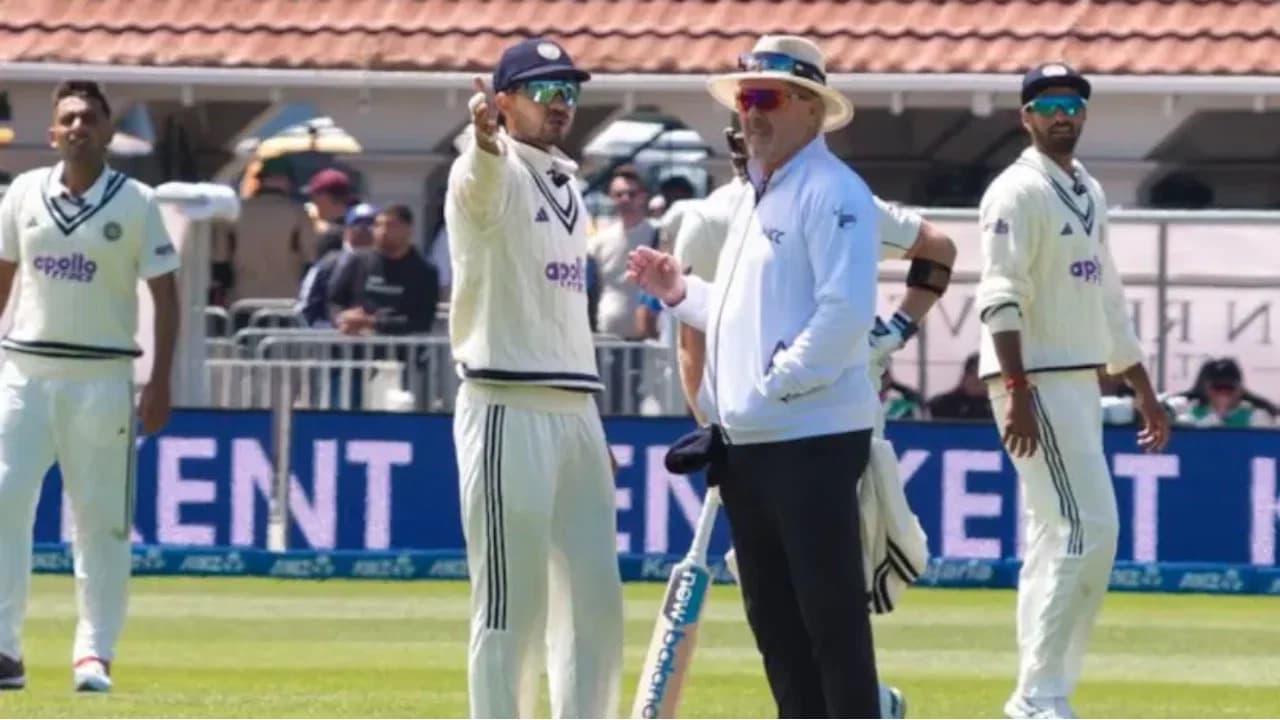
Watch: Shubman Gill clashes with umpires after Glenn Phillips' DRS confusion in 1st IND vs NZ Test
India captain Shubman Gill was visibly frustrated after India lost a DRS review against Glenn Phillips on Day 1 of the first Test against New Zealand. Gill questioned on-field umpire Richard Illingworth after third umpire Paul Reiffel upheld the not-out decision off Jasprit Bumrah's bowling.India had won the toss and elected to bowl at the Basin Reserve in Wellington on Thursday, November 19, putting New Zealand under pressure from the start. The hosts reached 60/4 at lunch after losing four wic...

Shoaib Akhtar admits Pakistan used bottle tops for ball tampering in England
Former Pakistan fast bowler Shoaib Akhtar has revealed how the team altered the ball during tours of England, while pointing to wider tampering practices across international cricket.

Three years on: India's 2023 ODI World Cup final heartbreak at Ahmedabad remembered
November 19, 2026 marks three years since Australia defeated India by six wickets in the ODI World Cup final at Narendra Modi Stadium, Ahmedabad.